
TOEM 2 field guide
TOEM 2 gameplay
The camera does the work
Photography is the verb everything else hangs on. Your camera has gotten an upgrade: you snap pictures to solve puzzles, uncover secrets, and document your discoveries. Some puzzles want a specific subject framed a specific way; others ask you to catch something happening in the world.
The official description highlights one more layer — new camera attachments that let you use the camera in more unconventional ways to overcome various problems in each region. Attachments turn the camera from a recording device into a toolkit, and each region's problems give them room to matter.
Stamps: the progression loop
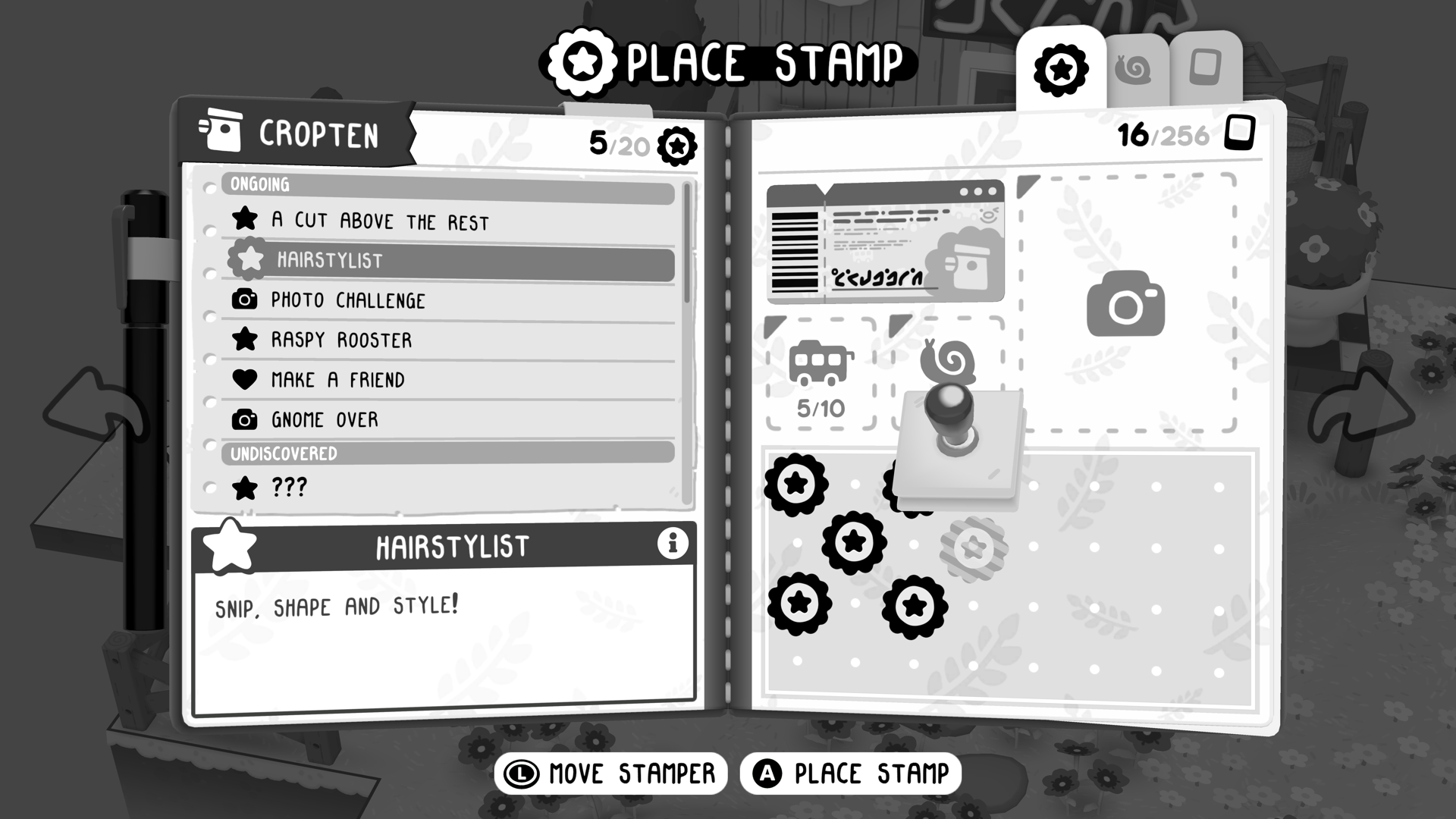
Progress is journal-driven. As you complete quests, document discoveries, and expand your critter compendium, you fill your journal with stamps. Each stamp is described by the developer as both a reminder of the little wonders you have uncovered and your ticket to unlocking the next region.
That makes the loop easy to read: help someone, photograph something odd, log a new critter, earn stamps, open the road onward. Because stamp sources are varied — quests, photos, compendium entries — you are never locked into one activity to keep moving.
The stamp system also doubles as the game's to-do list. A glance at the journal tells you which of the three sources is behind, and topping up the thinnest one is always enough to keep a region moving.
The compendium and the discovery layer
The critter compendium gives wandering a mechanical spine. Every creature you meet can be logged, and the compendium grows alongside quests and discoveries as one of the three sources feeding your stamps.
Discovery runs wider than fauna. The official description pairs puzzle-solving with uncovering secrets and documenting discoveries, so the world is set up to reward attention rather than speed — a hidden thing photographed is worth as much progress as a task completed.
What the camera cannot do
There is no combat and no failure state to manage. The camera observes rather than fights, and the official materials describe no health, no timers, and no penalties — the pressure the game removes is as deliberate as the systems it keeps.
That boundary also defines the challenge: the hard parts are observational. Finding the subject, framing it, and reaching the angle — with the new jumping and climbing — are where the game asks you to try.
Movement: jump and climb
TOEM 2 adds jumping and climbing to the series. The official site puts it plainly: this time around you can even jump and climb around the environment, allowing you to see the world in a whole new perspective.
Vertically reachable ledges and viewpoints stop being backdrops and become places you can actually reach, which changes how a photography game plays — the best angle is now somewhere you can physically get to.
The loop's parts reinforce each other. Quests point you at places worth photographing, photographs fill the compendium and the discovery log, and all three feed the stamps that open the next region — no single grind carries the trip.
Friends change the ending
The people you meet are not set dressing. Along the way, you make friends who can join you, and they impact your story and its ending. Companions who join early can still be with you at the credits, so route choices double as story choices.
The official description publishes no companions list, no ending count, and no branch conditions. What it does confirm is that two players who befriend different travelers can finish different stories.
Friendship and progression run on separate rails: helping people earns the quest stamps that open regions, while the friendships themselves pay out in story — who stands next to you when the ending arrives.
Pacing by design
The systems are tuned for a relaxed trip. The official description states TOEM 2 is built to be experienced at your own pace with no time limits or tricky requirements for full completion. Nothing expires, nothing sits behind a countdown, and full completion does not demand mastery — a design that also makes the game welcoming to returning fans of TOEM and first-time players alike.